Wire and Cable Marking Technologies: Choosing the Right System
A cable’s printed code is more than a label. It tells the installer, distributor and manufacturer what the product is, where it came from and how it should be used. On a fast extrusion line, that information must be applied continuously while the cable is moving.
The main wire and cable marking technologies are continuous inkjet (CIJ), laser marking, inkjet printing, hot stamping and sleeve or label marking. The right choice depends on the cable jacket, line speed, required durability and whether the mark needs to be permanent.
What should be marked on wire and cable?
Common marking requirements include:
- Manufacturer name or logo.
- Cable type and specification.
- Voltage rating.
- Conductor size or AWG.
- Standard or certification mark.
- Batch or lot number.
- Manufacturing date.
- Metre markings.
- Serial or traceability information.
Metre marking is especially important because installers and downstream processes may rely on accurate length information. The marking system must maintain the correct interval even when line speed changes.
Continuous inkjet (CIJ)
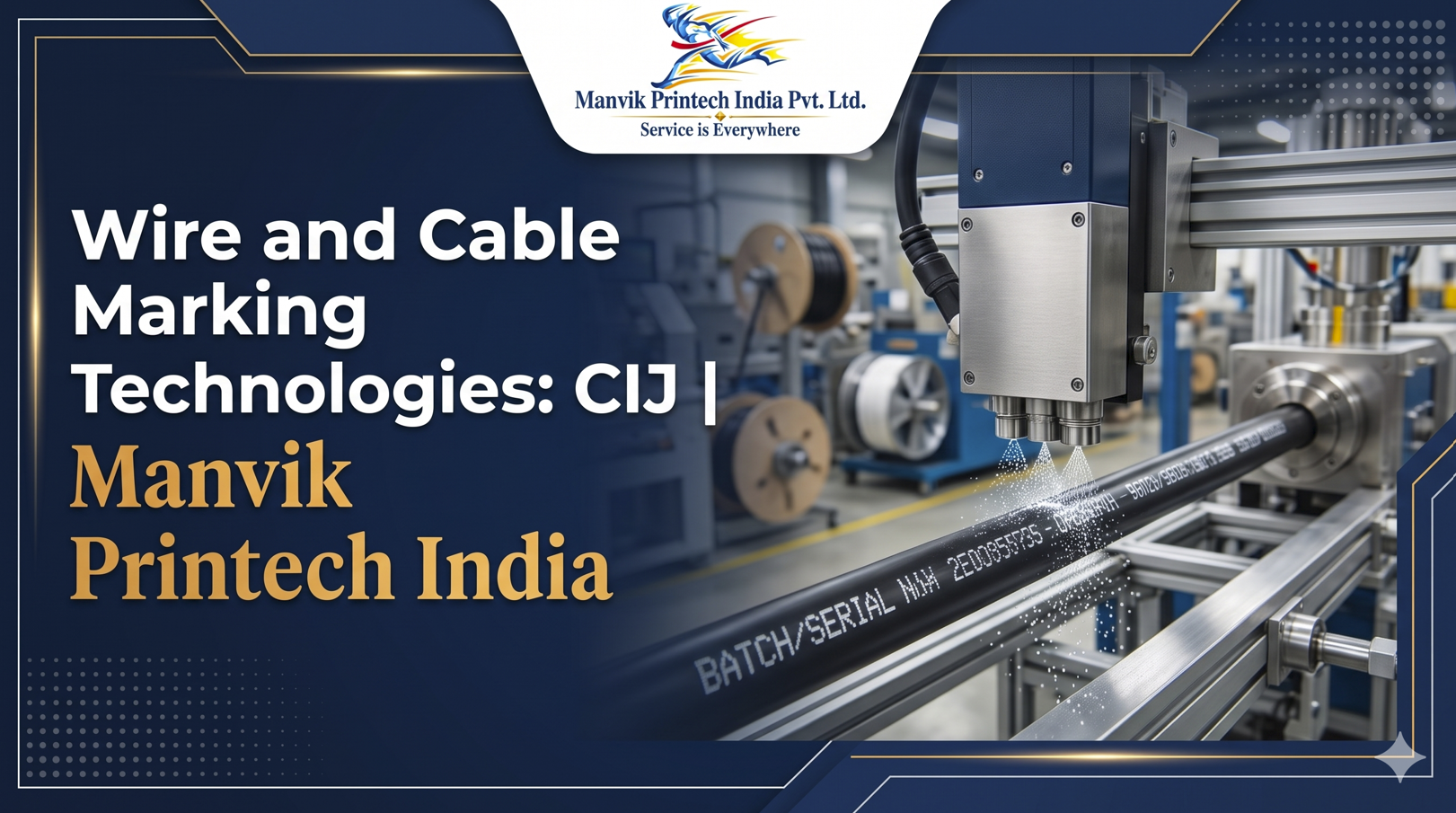
CIJ is widely used for high-speed, non-contact coding on moving wire and cable. The printer ejects ink droplets onto the jacket without touching the product, so it can support continuous extrusion and high line speeds.
Where CIJ works well
CIJ may be considered for:
- PVC, polyurethane, neoprene, EPR and CPE jackets.
- Fast-moving cable lines.
- Variable batch and date information.
- Metre marking.
- Different cable colours and jacket materials.
The ink must suit the jacket material and provide sufficient contrast. Fast-drying inks are commonly used for cable applications.
CIJ advantages
- Non-contact marking on moving cable.
- Suitable for variable data.
- Can support high line speeds.
- Flexible for changing messages and product types.
CIJ considerations
- Ink, solvent and maintenance are ongoing requirements.
- The mark may be less permanent than a laser mark, depending on ink, jacket and handling.
- Ink adhesion and contrast should be tested on the actual jacket material.
Laser marking
Laser marking changes the cable jacket using a focused beam. It can create a permanent mark without ink, ribbon or labels. The mark may be formed by colour change or by removing a very thin surface layer, depending on the material and laser type.
Where laser marking works well
Laser systems may be considered for:
- PVC cable jackets.
- Selected polymer jackets.
- High-volume production lines.
- Applications where permanence is more important than ink-based flexibility.
- Cable and wire identification that must survive handling and weathering.
CO₂ lasers are commonly evaluated for PVC marking, while UV lasers may be considered for selected polymers and heat-sensitive materials. Fiber lasers are more commonly associated with metal marking.
Laser advantages
- No ink or ribbon consumption for the marking process.
- Permanent mark on suitable jacket materials.
- Non-contact operation.
- Can support continuous marking on production lines.
Laser considerations
- Higher initial investment than many inkjet systems.
- Contrast depends on jacket colour and material.
- Safety enclosure, interlocks and fume extraction may be required.
- The jacket material must be tested for marking quality and durability.
Inkjet printing
Inkjet systems can be used for wire and cable marking where the line speed, cable diameter and jacket material suit the printer and ink. They may be appropriate for smaller production runs, offline marking or applications where a lower initial investment is important.
Inkjet advantages
- Lower upfront cost than many laser systems.
- Flexible message changes.
- Can print on selected cable jackets with suitable ink.
Inkjet considerations
- Ink adhesion and rub resistance must be tested.
- Ink and cartridge costs continue during production.
- Cable movement, diameter and surface condition affect print quality.
Sleeves and labels
Sleeve or label marking applies a pre-printed or printed sleeve around the wire or cable. This is often used for cut wires, terminated assemblies, field repairs and small batches rather than continuous extrusion lines.
Sleeve or label advantages
- Useful for short runs and assembled wires.
- Can carry detailed information or colour coding.
- Easy to apply after cutting or termination.
Sleeve or label considerations
- Adds a component to the cable assembly.
- May not suit continuous high-speed extrusion.
- Adhesive, sleeve size and cable diameter must be matched.
Technology comparison

These are application guides, not guarantees. The cable jacket, line speed and required code must be tested before choosing a system
What affects marking quality?
Cable jacket material
PVC, polyurethane, neoprene, EPR, CPE, HDPE and other materials respond differently to ink and laser energy. The jacket formulation and colour can affect adhesion, contrast and durability.
Line speed
The marking system must keep pace with the extrusion line. A longer message or denser code may affect the achievable marking rate.
Cable movement and vibration
Cable can move sideways, vibrate or change position as it passes the marking point. Guides, alignment rollers and correct mounting help maintain a consistent mark.
Metre-marking accuracy
For length marking, the printer must synchronise with line speed. An encoder or suitable speed signal can help maintain the required interval.
Cable diameter and curvature
A small wire has a curved surface, so the printhead or laser focus must suit the diameter. Test the smallest and largest cable sizes in the product range.
Environmental exposure
Cable may face friction, coiling, pulling, sunlight, moisture and outdoor weathering. Test the mark after conditions that resemble real handling and installation.
How to choose the right system
Before requesting a quotation, prepare:
- Cable sample and jacket material.
- Cable diameter range.
- Line speed and extrusion process.
- Required message and marking length.
- Metre-marking interval.
- Required ink or mark colour.
- Durability and weathering requirements.
- Cable colour and required contrast.
- Available space and safety requirements.
- Whether the mark must be permanent.
A sample test should use the actual cable and production speed. Review the mark immediately and after coiling, pulling, rubbing and exposure to the expected environment.
Wire and cable marking from Manvik Printech India
Manvik Printech India lists a UV laser printer for cables, HDPE pipes and LLDPE drip laterals, with a 355 nm wavelength, 3 W, 5 W and 10 W power options, automatic operation, a 150 × 150 mm marking area and a stated marking speed of 5,000 mm/s.
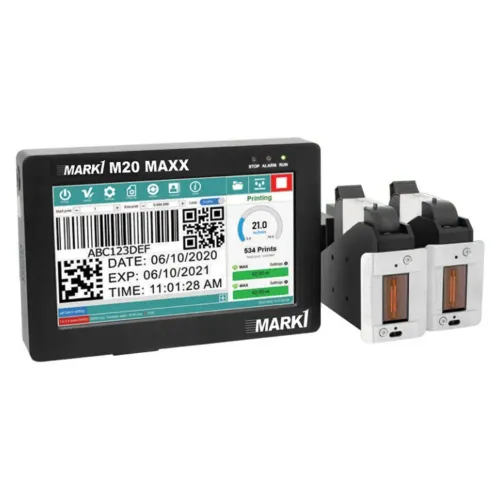
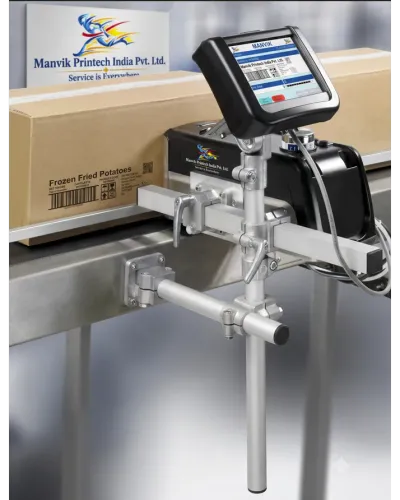
The company also lists an inkjet coding device that can print on cables, pipes and other industrial materials, and describes CIJ as suitable for continuous coding on moving products including wires and cables.
For an application review, share the cable sample, jacket material, diameter, line speed, required message and whether the mark must be permanent. That information helps determine whether CIJ, UV laser or another technology should be tested.
Why choose Manvik Printech India?
- A UV laser marking option listed for cables, HDPE pipes and LLDPE drip laterals
- Inkjet coding options listed for cables, pipes and industrial materials.
- A portfolio that includes CIJ and laser marking technologies for continuous production applications .
- A Delhi-based contact point for product, sample and quotation enquiries.
Address and contact details
Manvik Printech India Pvt. Ltd.
First Floor, School Block, S-531-A, Shakarpur Khas Part 2, Block S 2, Upadhyay Block, Laxmi Nagar, Delhi, 110092, India
Phone: +91 99069 05312
Additional phone: +91 88827 65261
Email: ravi.sharma@manviktechnologies.in
Website: manvikprintechindia.com
Working hours: Monday–Saturday, 10:00 AM–6:30 PM; Sunday closed.
Confirm current specifications, availability, warranty terms and installation support with Manvik Printech India before publishing.
FAQs
Which technology is best for high-speed cable marking?
CIJ is commonly considered for high-speed, continuous marking on moving cable because it is non-contact and supports variable data. Laser marking may be considered where permanence is the priority.
Can laser marking be used on PVC cable?
Yes. CO₂ laser marking is commonly evaluated for PVC cable jackets. Contrast and durability depend on the jacket formulation and colour
Can inkjet print metre markings on cable?
Yes, if the printer is synchronised with the line speed and the marking interval is controlled. Test the metre-marking accuracy at production speed.
Which is more permanent: inkjet or laser?
Laser marking is generally more permanent on suitable jacket materials because it changes the jacket surface rather than applying ink. Inkjet marks can still be durable when the correct ink and jacket are used
What should I test before buying?
Test the actual cable jacket at production speed. Check adhesion, contrast, metre-marking accuracy, rub resistance and performance after coiling and handling.
Keywords