QR Printing Machine: How to Choose the Right System for Your Product
A QR code is useful only if it scans when a customer, warehouse worker or production team needs it. If the code is too small, poorly printed or distorted by a moving package, it may fail even when it looks clear to the eye.
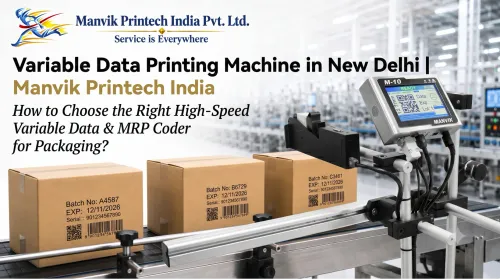
A QR printing machine prints QR codes directly on products or packaging. The right system depends on the surface, code size, production speed and whether the code is fixed or unique to each product. TIJ, CIJ and laser systems can all be used for QR-code marking in suitable applications.[linxglobal][cyklop]
What can a QR code do on a product?
Manufacturers may use QR codes for:
- Product identification and traceability.
- Batch or lot information.
- Serialisation.
- Product instructions or manuals.
- Warranty or registration links.
- Inventory and warehouse records.
- Customer information and promotions.
The code’s purpose determines what data it carries and how it should be printed. A code that links to a public product page has different data and security needs from one used to track individual items in a production system.
Which printer is right for your QR code?
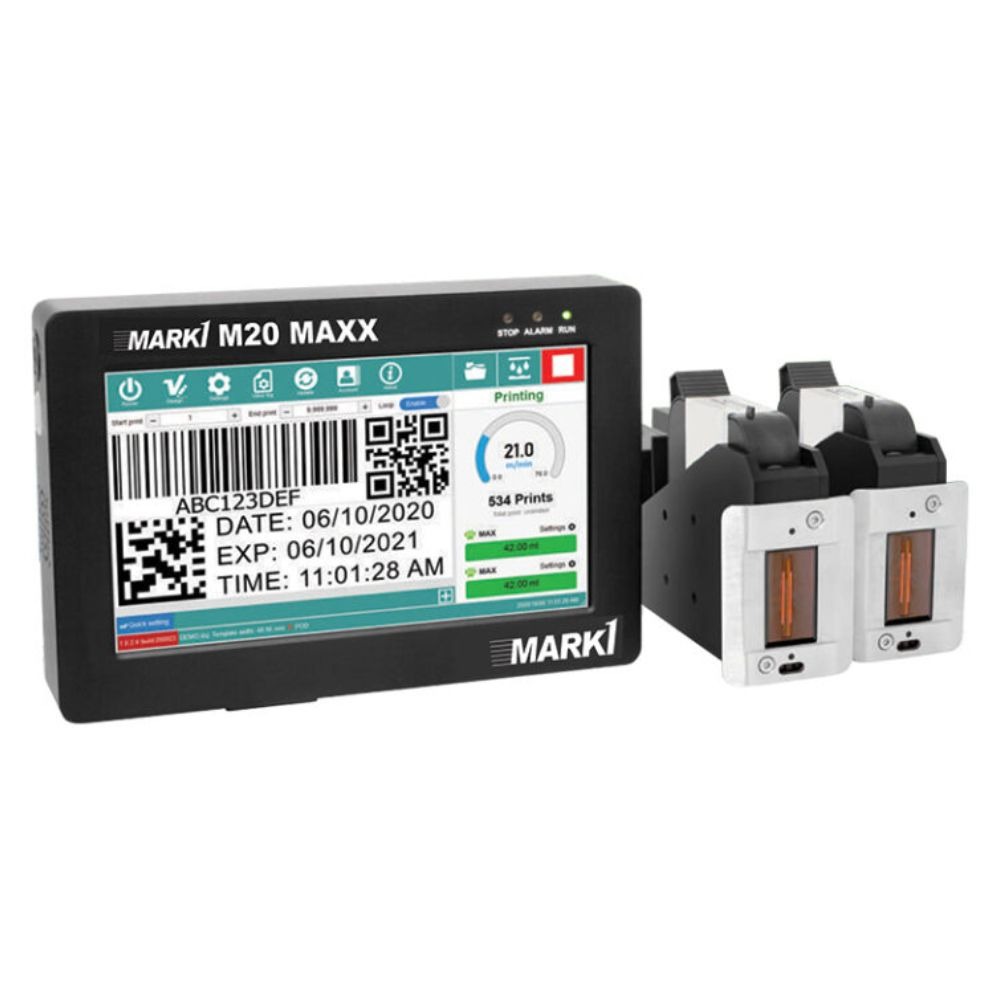
TIJ printer
Thermal Inkjet (TIJ) printers are often considered when a sharp, high-resolution code is needed on cartons, labels, paperboard and selected pouches. They may suit pharmaceutical cartons, FMCG packaging and secondary packaging, provided the cartridge is compatible with the surface.
CIJ printer
Continuous Inkjet (CIJ) printers may suit bottles, cans, pipes, cables and other products moving continuously or having curved surfaces. Ink selection and product movement affect code clarity.
Laser marking machine
A laser can mark QR codes directly on suitable materials without ink or ribbon. Fiber lasers are commonly evaluated for metal parts; CO₂ or UV lasers may be considered for selected packaging, plastics, glass and other non-metal surfaces. The material must be tested before deciding.
Online printer
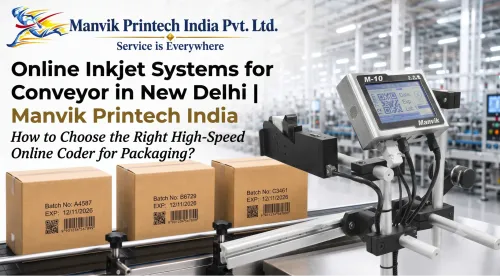
An online printer is mounted beside a conveyor. A sensor triggers printing as each product passes. Product guides and correct sensor timing help keep the code in the intended position.
QR-code applications
QR codes may be printed on:
- Cartons and boxes.
- Labels and product stickers.
- Pouches and flexible packaging.
- Bottles, jars and containers.
- Metal components and nameplates.
- Plastic parts.
- Cables and pipes.
- Outer cases and shipping packs.
The material, coating and finish can affect ink adhesion or laser contrast. For this reason, test the actual product rather than relying on a generic claim that a printer works on “all surfaces.”
Why QR codes may fail to scan
A code can fail even if it appears acceptable. Common causes include:
- The code is too small for the scanner or scan distance.
- The print lacks contrast.
- The code is blurred, stretched or distorted.
- The surface is curved, glossy or uneven.
- The product moves during printing.
- A fold, seam or label edge interferes with the code.
- The code is printed over a busy design.
- The encoded data is incorrect.
- The scanner is not suited to the code or surface.
A QR code should be tested with the scanner used in production or distribution. For applications that require formal quality control, use an appropriate barcode verifier rather than relying only on a phone-camera scan. GS1 guidance discusses barcode verification as a measurement of symbol quality against the relevant specification.
What to check before choosing a QR printing machine
Before asking for a quotation, prepare:
- Product or packaging sample.
- Material, coating and surface finish.
- QR-code artwork or data requirements.
- Required code size.
- Production speed and product spacing.
- Marking location and orientation.
- Scanner type and scanning distance.
- Whether every item needs a unique code.
- Exposure to moisture, rubbing, heat or chemicals.
- Handheld, online or permanent marking requirement.
If each product needs a unique QR code, confirm how variable data will reach the printer—from a file, scanner, database, PLC or production system. The printer must be tested with the real data flow, not just a sample image.
QR printing on different materials
Cartons and labels
TIJ is often evaluated for clear QR codes on cartons, labels and paperboard. Coatings and varnish may affect ink absorption and drying.
Pouches and flexible films
Laminated, metallised or glossy films need application-specific testing. Check the code after filling, sealing and handling.
Bottles and jars
Curved surfaces can distort a code or make it difficult for a scanner to capture. Position, bottle movement and printhead distance matter.
Metal components
Fiber laser marking may be evaluated for QR or Data Matrix codes on suitable metal parts. The code size, surface finish and required durability should be tested.
Plastics and glass
TIJ, CIJ or laser marking may be suitable depending on the material and process. Plastic grade, colour, additives and surface treatment can change the result.
Sample testing before purchase
A practical QR-code test should check:
- Code readability.
- Contrast.
- Position accuracy.
- Marking speed.
- Resistance to rubbing and handling.
- Performance after sealing or packing.
- Scanner compatibility.
- Surface damage or discolouration.
Send the actual packaging sample and required code to the supplier. A sample test can help establish whether TIJ, CIJ or laser marking is the better fit.
QR printing solutions from Manvik Printech India
Manvik Printech India supplies coding and marking systems, including TIJ, CIJ, laser and online printing options. The company’s published information lists its New Delhi address and a contact number of +91 8882765261. Its website also describes sample coding and trial options, subject to model and location.
To discuss a QR-code application, share the product material, code size, production speed and whether the code is fixed or unique to each item. That information helps identify a suitable system and plan a sample test.
Why choose Manvik Printech India?
- Product and application guidance across TIJ, CIJ and laser marking.
- Support for QR-code printing on packaging and selected components.
- Sample coding options, subject to application and location.
- Delhi-based business serving manufacturing and packaging customers.
- Enquiry and consultation through phone, email or the website.
Contact details
Manvik Printech India Pvt. Ltd.
Address: First Floor, School Block, S-531-A, Shakarpur Khas Part 2, Block S 2, Upadhyay Block, Laxmi Nagar, Delhi, 110092
Phone: +91 99069 05312
Email: ravi.sharma@manviktechnologies.in
Website: www.manvikprintechindia.com
Share a sample or product photograph, QR-code requirement and production speed to request an application review. Confirm current contact details and service availability before publishing.
FAQs
Which machine prints QR codes on cartons?
A TIJ printer is often evaluated for high-resolution QR codes on cartons and labels. The ink must suit the carton coating and the code must scan correctly.
Can a QR printing machine print on bottles?
Yes. CIJ, TIJ or laser systems may be considered depending on the bottle material, curvature, speed and desired durability.
Can QR codes be marked directly on metal?
Yes. A suitable laser marking system can mark QR or Data Matrix codes on metal components, subject to code-size and scanner testing.
Should I use a phone to test a printed QR code?
A phone can provide an initial scan check, but it may not represent the scanner used in production or distribution. Test with the intended scanner; use a verifier when formal code-quality measurement is required.
Can every product have a unique QR code?
It may be possible if the printer receives unique data from a file, database, scanner, PLC or production system. Confirm the data connection and serialisation workflow before choosing the machine.
Suggested internal links:
- TIJ Printer.
- CIJ Printer.
- Online Inkjet Printer.
- Barcode Laser Marking Machine.
- Fiber Laser Marking Machine.
- UV Laser Printer.
- Coding on Cartons and Boxes.
- Coding on Bottles and Jars.
- Request a Sample Marking Test.
Keywords