Variable Data Printing Machine: Print the Right Information on Every Pack
Imagine your production line is running two products back-to-back. The cartons look almost identical, but they need different batch numbers, expiry dates and barcodes. How do you make sure each pack gets the right information—without stopping the line every time the message changes?
That is where a variable data printing machine comes in. It prints changing information directly on products or packaging, helping manufacturers code each batch, pack or individual item with the data it needs. Manvik Printech India Pvt. Ltd., based in Delhi, supplies coding and marking solutions including TIJ, CIJ, laser and thermal transfer systems.
What is variable data printing?
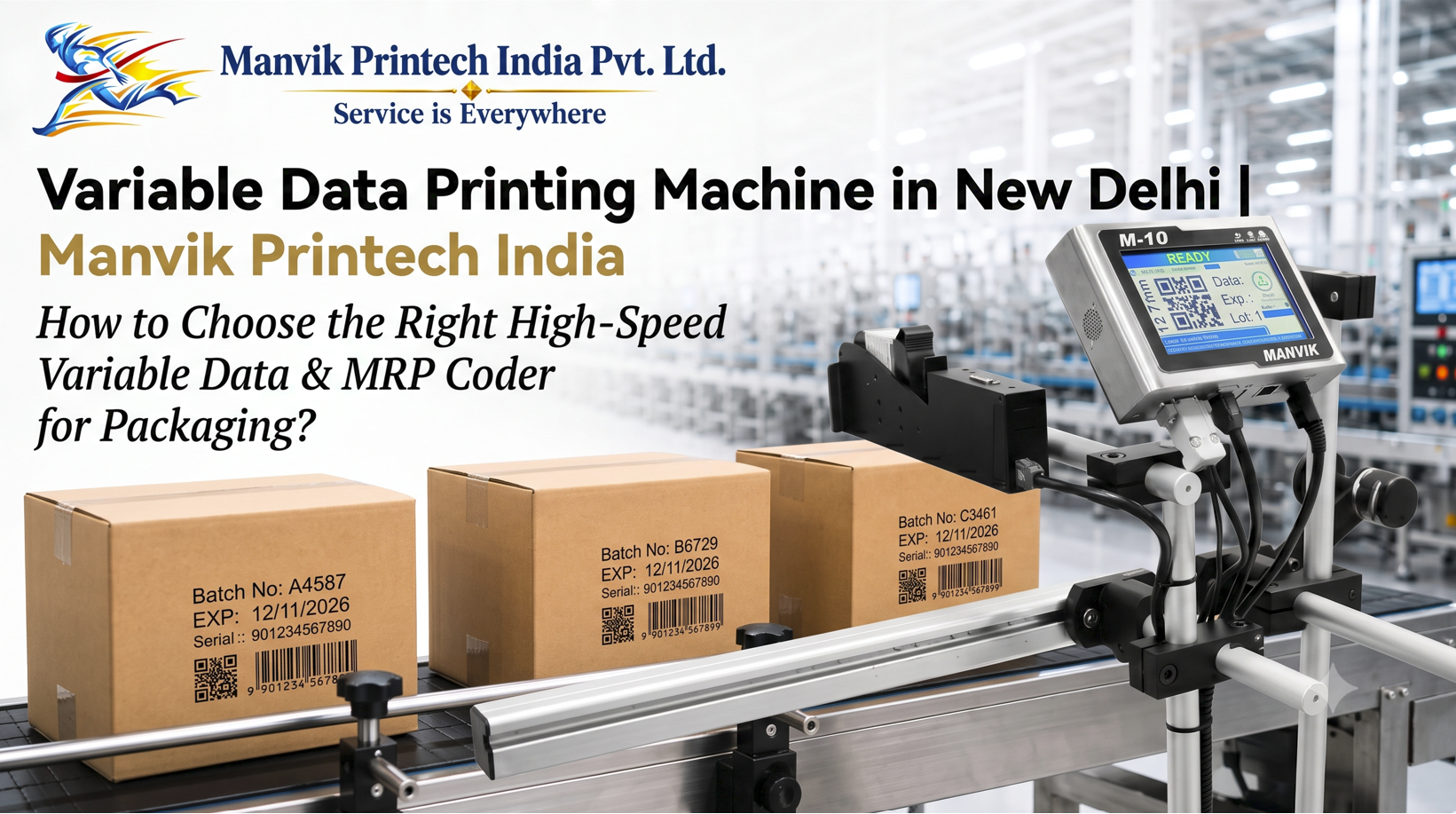
Variable data printing means printing information that changes from one product, pack or production run to another. Instead of using a fixed stamp or plate, the printer receives digital data and prints the selected message.
Common examples include:
- Batch or lot numbers.
- Manufacturing and expiry dates.
- Serial numbers.
- MRP or price details.
- Barcodes, QR codes and Data Matrix codes.
- Product names and model numbers.
- Shift, line or operator identification.
- Logos and selected graphics.
For example, a manufacturer may print a different batch number on each production run while keeping the rest of the carton design unchanged. If every individual product needs a unique serial number, the printer must also receive the correct data for each item.
Where are these machines used?
Variable data printing is used across many manufacturing and packaging environments, including:
- Food and beverage packaging.
- Pharmaceutical cartons and labels.
- FMCG and personal-care products.
- Pouches and flexible packaging.
- Bottles, cans and containers.
- Cartons, cases and shipping boxes.
- Cables, pipes and industrial components.
- Automotive and medical components.
The right machine depends on the material, print size, line speed and data requirements—not just the industry name.
Choosing the right printing technology
“Variable data printer” describes the job, not one specific type of machine. The technology should suit the surface and production line.
Thermal Inkjet (TIJ)
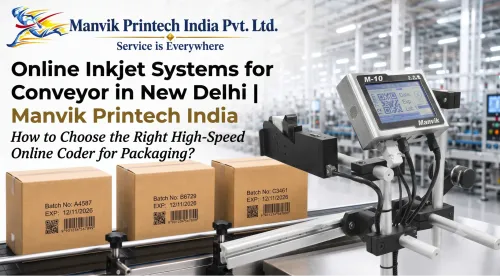
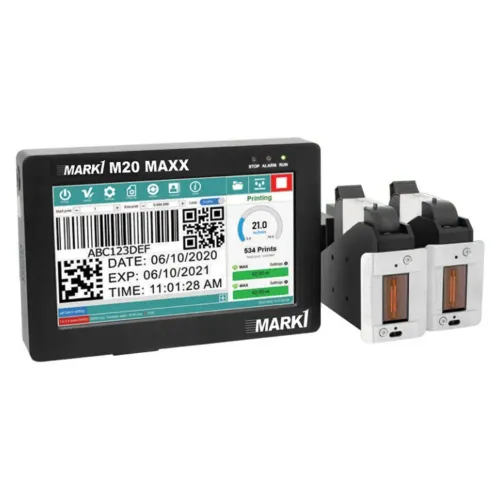
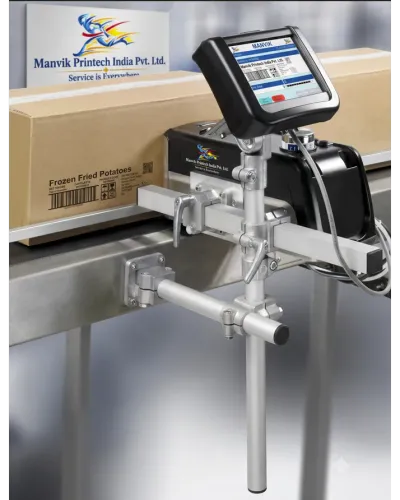
TIJ printers are often considered for crisp, high-resolution text, barcodes and QR codes on cartons, labels, paperboard and selected other materials. They are available in handheld and online configurations. Manvik lists TIJ systems among its coding options for variable information such as batch details, dates, barcodes and QR codes.[manvikprintechindia]
Continuous Inkjet (CIJ)
CIJ printers may be suitable for continuous, non-contact marking on products such as bottles, cans, wires, pipes and other items moving along a production line. The ink must be chosen for the product surface and operating conditions.
Laser marking
Laser systems create marks on compatible materials without ink. The suitable laser type depends on the material and the marking requirement. A sample test can help assess contrast, code quality and any effect on the product surface.
Thermal Transfer Overprinting (TTO)
TTO systems are commonly evaluated for printing variable information on flexible packaging films. They may suit applications such as snack bags and other film-based packs, depending on the packaging and line setup.
Manvik’s published portfolio includes CIJ, TIJ, laser marking, track-and-trace and TTO solutions.
What to consider before buying
Before comparing machines or requesting a quotation, gather these details:
- Product and packaging material.
- Surface finish—porous, coated, glossy, wet, dusty or oily.
- Information to be printed.
- Required text height and code size.
- Production speed and product spacing.
- Whether printing is handheld or inline.
- Whether each item needs a unique code.
- Barcode or QR-code scanning requirements.
- Exposure to rubbing, moisture, heat or chemicals.
- Available space and data connections on the line.
If the printer must produce unique serial numbers, also confirm how it will receive and manage the data. The workflow may involve a computer, scanner, PLC, database or production system. Test this process with sample data before the printer is installed.
Common challenges and practical checks
The code smears or fades
The ink may not suit the surface, or the product may be handled before the mark dries.
Check: ink compatibility, surface condition, drying time and rub resistance.
A barcode or QR code will not scan
A code can appear readable but fail with the scanner used on the line.
Check: code size, contrast, print resolution, positioning and scanning distance. Test with the intended scanner; consider formal verification if the application requires it.
The wrong batch message is printed
Manual message selection or data entry can lead to coding errors, especially during frequent changeovers.
Check: operator controls, message approval, barcode-based selection or connection to the relevant production data source.
The printer cannot keep pace
A longer message or denser code may affect the usable print speed.
Check: line speed, message content, product spacing and trigger timing with a production-like test.
The mark is inconsistent
Product movement, uneven surfaces or changing printhead distance can affect the result.
Check: guides, mounting, sensor position and the actual package condition during production.
How to run a useful sample test
A sample test should use the actual product or packaging—not just a similar material. Review the print immediately and after normal handling.
Check:
- Print clarity and contrast.
- Code position and size.
- Drying time.
- Smudge and rub resistance.
- Barcode or QR-code readability.
- Performance at the required line speed.
- Whether the mark remains clear after packing or stacking.
A well-planned test can help determine whether TIJ, CIJ, laser or TTO is the better match before making a purchase decision.
Variable data printing with Manvik Printech India
Manvik Printech India Pvt. Ltd. supplies coding and marking solutions for product identification, batch coding, serialization and variable printing. Its published portfolio includes TIJ, CIJ, laser marking, TTO and track-and-trace systems.
For an application review, share your product material, sample packaging, code content, expected production speed and whether each code is fixed or unique. This helps the team assess which technology should be tested.
Why choose Manvik Printech India Pvt. Ltd.?
- A range of coding and marking technologies, including TIJ, CIJ, laser and TTO.
- Options for batch codes, dates, barcodes, QR codes and serialisation.
- Application-based discussion to help match the printer to the material and production process.
- Delhi-based contact point for manufacturers seeking coding solutions.
- A published portfolio that includes printing, marking and track-and-trace systems.
Address and contact details
Manvik Printech India Pvt. Ltd.
First Floor, School Block, S-531-A, Shakarpur Khas Part 2, Block S 2, Upadhyay Block, Laxmi Nagar, Delhi, 110092, India
Phone: +91 8882765261
Email: ravi.sharma@manviktechnologies.in , info@Manvikprintechindia.com
Website: manvikprintechindia.com
Enquiry checklist: Include a product photograph or sample, the material, the code you need to print and your approximate line speed. Confirm current availability, service coverage and machine specifications with Manvik before publishing or placing an order.
FAQs
What does a variable data printing machine print?
- It can print changing details such as batch numbers, manufacturing and expiry dates, serial numbers, prices, barcodes, QR codes and product information.
Can one machine print both text and QR codes?
- Some systems support both, depending on the printer model, printhead, software, resolution and substrate. Confirm the required code size and test it with the intended scanner.
Which printer is best for cartons?
- TIJ is often considered for high-resolution coding on cartons and labels. The carton coating and ink compatibility should be tested.
Which machine is suitable for flexible packaging?
- TTO may be considered for flexible films, while other technologies may suit specific materials and setups. Check the film, packaging machine and required code before selecting a system.
Can each product receive a different serial number?
- Yes, if the printer is configured to receive unique data for each item and the data flow is properly controlled. Test the complete data-handling process, not just the print quality.
Keywords